Çerçiz Topulli: From Mountain Fighter to National Legend
A commander from Gjirokastër who rose from humble beginnings to become one of Albania's most celebrated patriots, Çerçiz Topulli embodied the struggle for Albanian freedom through both armed resistance and written word.
Çerçiz Topulli was born into the prominent Topulli family of Gjirokastër, whose lineage was jealously preserved by his father Ago on a walnut board. Ago had eighteen children by four wives, and it was his fourth wife, Haso from the village of Kardhiq, who gave birth to Çerçiz and his famous brother Bajo. Shaped by patriotic figures like teacher Koto Hoxhi and later by his close friend Mihal Grameno, Çerçiz devoted himself entirely to the cause of Albanian liberation, marrying at age twenty-four but, as contemporary Mihal Grameno observed, never truly living a married life because he was instead married to his rifle and Albania's freedom.
In 1905, Çerçiz joined his brother Bajo and other patriots in founding the Committee for the Freedom of Albania, which established branches across Albanian regions and adopted a statute of twenty-four articles. By 1906, the brothers organized the first armed bands in Korçë, drawing fighters from Kolonjë, Devoll, and Përmet. That September, the band carried out its first major operation, executing Foti, the bishop of Korçë, who was accused of responsibility for massacring Papa Kristo Negovani. This action sparked fierce debate among Albanian patriots: while Fan Noli defended it in the newspaper Kombi, Faik Konica condemned it in multiple articles, viewing armed conflict as futile and harmful. The disagreement reflected two competing visions—one favoring radical military action and the other prioritizing international diplomatic support.
Following the bishop's execution, Ottoman authorities arrested Çerçiz's family and confiscated their property. Çerçiz, Bajo, and their companion Zeman Mashkullora fled to Bulgaria, where they strengthened the committee's diaspora branches, raised funds for Albanian-language publications, and supported the armed struggle. During this period, Çerçiz emerged not only as a fighter but as a writer and orator, publishing articles in newspapers such as Drita and Liri e Shqipnisë. In a 1906 piece titled "Letter from a Patriot," he condemned Ottoman exploitation and called for unity among all Albanians regardless of religion: "Let us unite, then, and become one body, Christians and Muslims alike. Together, let us work and fight against our enemies."
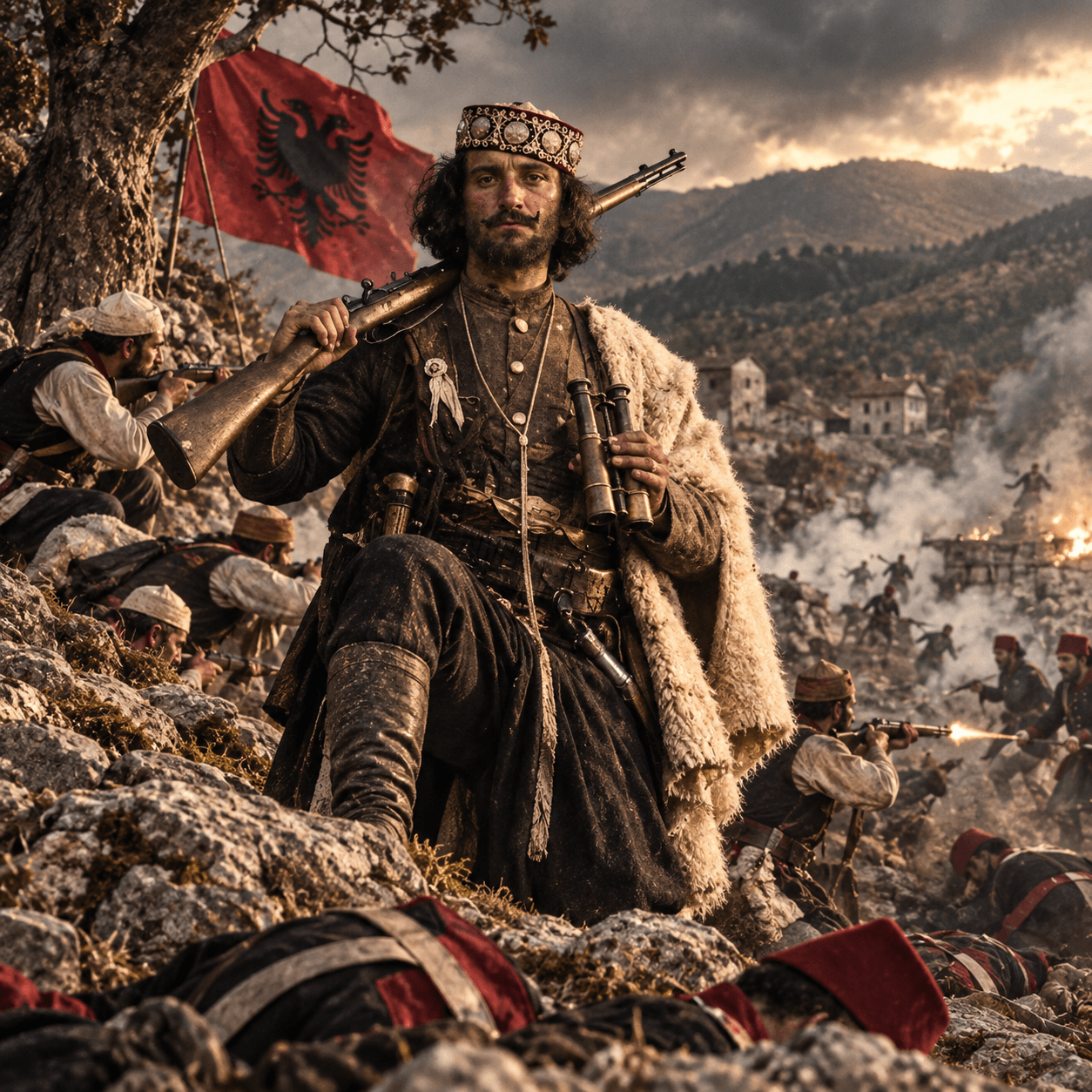
In March 1908, after returning to Albania, Çerçiz and his band executed the Bimbashi of Gjirokastër, an Ottoman official responsible for arresting over thirty fighters and patriots. On March 18, Ottoman troops surrounded the band in the village of Mashkullorë, forcing them to take shelter in a barn. What followed became the legendary Battle of Mashkullorë, in which only five fighters—Çerçiz, Mihal Grameno, Zeman, Myftar, and Aslan—faced dozens of Ottoman soldiers. Mihal Grameno's eyewitness account captured Çerçiz moving "like a great commander, with a rifle in his hand and a six-shooter between his teeth, encouraging us and firing at the soldiers," invoking Skanderbeg and declaring, "We are the sons of Skanderbeg, and we will not surrender." After hours of combat, the fighters escaped using darkness and fog, losing only Hajredin Tremishti. This almost miraculous victory—comparable to David's triumph over Goliath—became immortalized in folk songs, with prisoner Shaj Luçi composing verses about Çerçiz immediately after the Bimbashi's assassination.
The years following the Young Turk Revolution of July 1908 saw a decline in armed activity as many patriots, including Çerçiz and Bajo, attended the Congress of Manastir in November, hoping the new government would grant freedoms. However, the Ottoman reforms proved deceptive, and by 1913-1914, Greek forces and pro-sultan rebels threatened Albanian lands. Çerçiz led fighters against Greek andart bands throughout the south and southeast, participating in battles at Kardhiq, the Monastery of Cepo, and Skërfica Pass. During these brutal campaigns, he demonstrated both military skill and unexpected mercy: when his men prepared to kill a wounded Greek soldier, Çerçiz ordered them to save the man, instructing nearby shepherds to feed him cold milk and threatening them with death if anything happened to him—a stark contrast to the massacres being committed by Greek forces around him.
In 1914, Çerçiz moved north to organize defenses against Serbian and Montenegrin armies alongside commanders like Bajram Curri and Isa Boletini. His prominence apparently provoked jealousy, and assassination attempts were made against him by men allegedly connected to Esat Pasha Toptani, though both failed. On June 27, 1915, Montenegrin forces arrested Çerçiz in Shkodër and released him two days later, only to arrest him again on July 15. He and his companion Muço were sent bound toward Cetinje but never arrived; Montenegrin soldiers executed them near Shkodër, their bodies hidden until a villager revealed where they had been buried. Çerçiz Topulli, who had devoted his entire adult life to Albanian liberation, died at just thirty-five years old on the plain of Shtoj. Though his life ended tragically, his legacy endured in the memory of the Albanian people and in the great stone house that still stands silent and proud in Gjirokastër.